
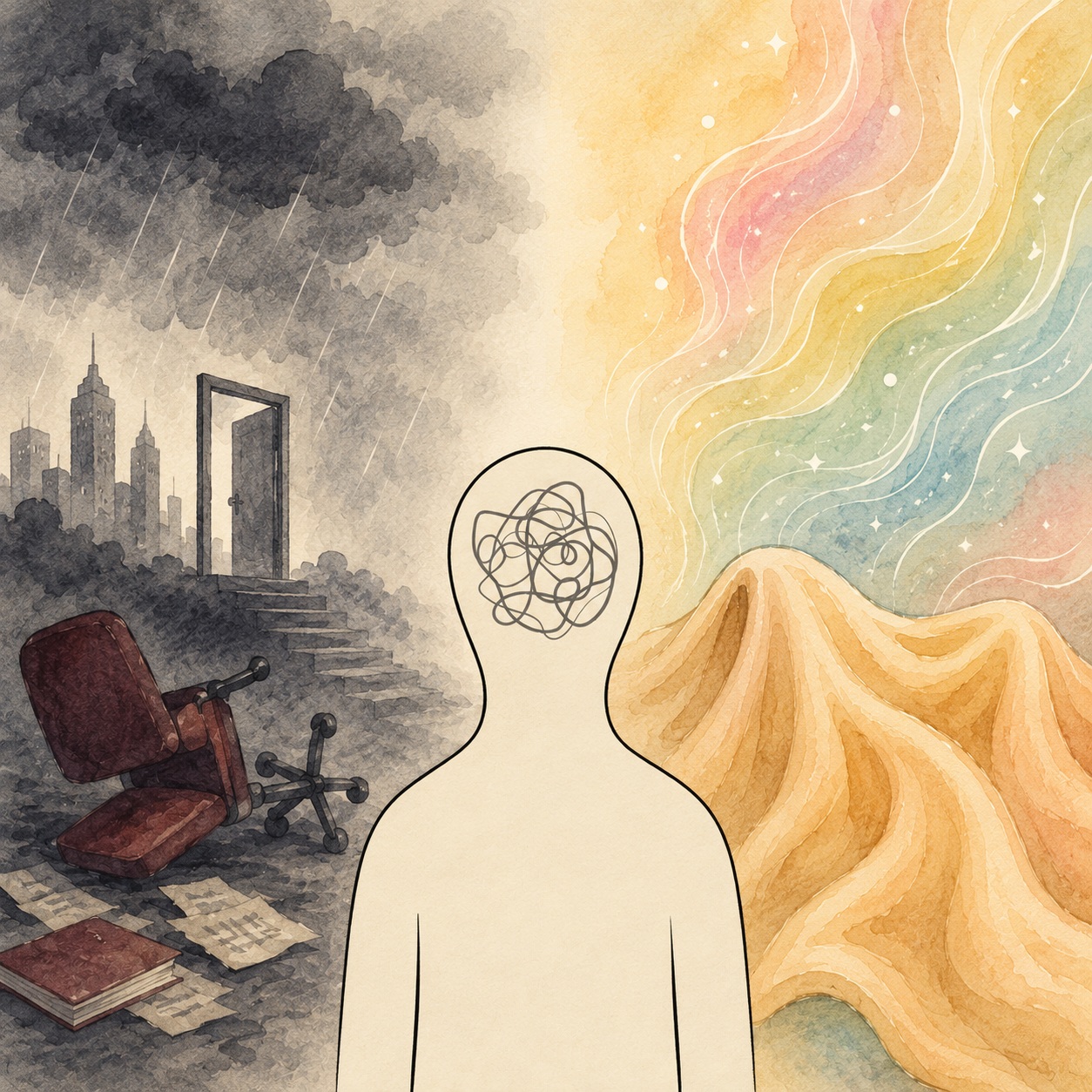
Can you trust your story of what happened?
The other day, a client said: “I knew that promotion would go to her instead”.
And then I listened to a fascinating story of self-denigration.
How they had gotten every.single.thing.wrong. And bad luck too.
Just the day before, another had said: “I knew that job was the right move”.
And then treated me to a wonderful story of personal brilliance.
How they did, wrote, timed everything to perfection. And ta daaaa.
Both stories were protective interpretations.
(The stories contain no less than three cognitive biases: outcome bias, hindsight bias and self-serving bias)
In the first instance, their story softened the sting of failure.
In the second instance, their story lavished praise on that person’s vulnerable ego.
We misremember the past in ways that protect our ego.
Thank you, my brain, for the care you take of my ego 🙏
However.
A good outcome does not prove a good decision. Nor does a bad outcome prove a bad decision.
If you tell yourself that you knew something when in fact you didn’t, you won’t think critically.
If you let your brain rewrite the past to make an event seem predictable, you’re abdicating agency.
When you congratulate yourself, you overlook the role that external factors played.
The story we tell ourselves about an outcome determines what we learn from it.
In the moment, my clients’ stories protected them from disappointment and uncertainty.
While that is tremendously helpful, the stories were equally shaping what each person did next.
I feared that the first client’s story would lead to disengagement and dropping performance, both of which would make progression even unlikelier. Along similar lines, I was concerned that the second’s overconfidence left them underprepared for the challenges of their new role.
At their respective next sessions, they were experiencing the consequences of their interpretations.
By then, both had faced difficult conversations with their managers.
Different circumstances, but a red flag for each.
Positively, that meant they were ready to look at what had happened. They could examine what they did. What was in their control and what wasn’t. What they missed. What might have gone differently.
 Outcome quality doesn’t tell you much about decision quality.
The Relationship Wisdom pivot: your brain is a mother hen. It offers you a comfort blanket: a convenient account of the past. Don’t let that account go unexamined. You’d risk learning the wrong lesson.
When you’re done licking your wounds, really examine that decision. Can you improve your odds next time?
When you’re done celebrating, really examine that decision. How much credit do you really deserve?
Examining your decisions irrespective of outcome is how you get better at making decisions.
📞 + 41 79 532 4754
📧 alexandra@coachingforinspiration.com
#coachingforinspiration #interpretingcareeroutcomes #criticalthinkingat work